Surprising Trastevere Rome Facts, From Regio XIV to the Noon Cannon
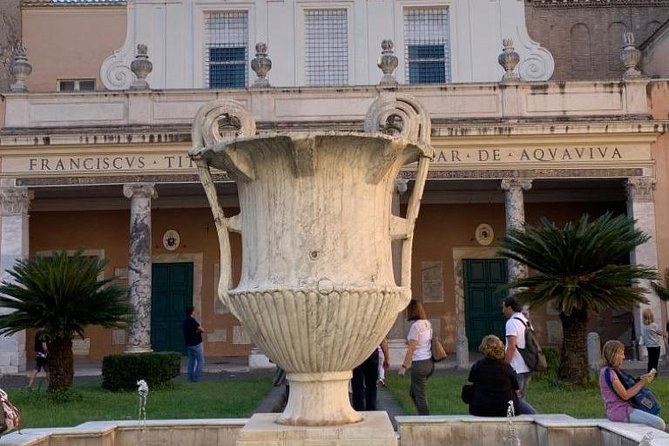
The short answer. Trastevere was a Roman region before it was a neighborhood, its people call themselves "we others", and a cannon above it has told Rome the time since 1904. Its basilica stands on a legend of oil, its patron Madonna was pulled from the Tiber, and its best-known square is named after a poet's pen name. Each fact below comes with the place you can still see it.
Trastevere looks like a village that the city grew around. The history under the cobbles is older and odder than that, and most of it is still visible if you know where to stand. These are the facts that surprise visitors most, each tied to a real place in the quarter. Read them before a best food tour trastevere rome and your guide's stories will land in places you already recognise.
1. It was a Roman region before it was a rione
When Augustus divided Rome into fourteen regions, the west bank of the Tiber became Regio XIV, Transtiberim. It took in the Janiculum, the Vatican hill and Tiber Island. Today's Trastevere is Rione XIII, a much smaller slice of the same ground.
2. The name is simply "across the Tiber"
Trastevere comes from the Latin trans Tiberim. For most of Rome's history, crossing the river meant leaving the city proper. The name still describes how you arrive: over a bridge.
3. Its people call themselves "we others"
Trasteverini use the word Noantri, from noi altri, "we others". It marks them out from the Romans across the river. The July festival, the Festa de' Noantri, takes its name from it.
4. The patron Madonna was found in the river
The festival honours the Madonna del Carmine, called the Madonna Fiumarola, "of the river". Tradition says fishermen found her wooden statue at the mouth of the Tiber in 1535. She is kept at the church of Sant'Agata and carried through the streets during the festa.
5. Piazza Trilussa is named after a pen name
Trilussa was the Roman dialect poet Carlo Alberto Salustri, born in 1871, and his pen name is an anagram of his surname. The square took his name in 1952; before that it was Piazza Ponte Sisto. His monument, unveiled in 1954, carries his poem "All'ombra".
6. Ponte Sisto stands on a Roman bridge
The footbridge most visitors cross was built in 1473–1479 for Pope Sixtus IV, who gave it his name. Its builders reused the foundations of an ancient Roman bridge on the same line.
7. You can still cross a bridge from 62 BC
Ponte Fabricio, joining Tiber Island to the left bank, was built in 62 BC. It is the oldest Roman bridge still standing in its original form. Its partner, Ponte Cestio, joins the island to Trastevere; that one was largely rebuilt in 1880–1892.
8. The basilica stands on a legend of oil
Tradition dates Santa Maria in Trastevere to Pope Callixtus I, in the early third century, on the spot where oil is said to have sprung from the ground. The building you see is a rebuilding of 1138–1143. Pietro Cavallini's mosaics in the apse date from 1291.
9. A fresco was hidden behind a wall for three centuries
At Santa Cecilia, Cavallini painted a Last Judgment in what became the nuns' choir. A wall built after the Council of Trent covered it, and it was rediscovered in 1900. You can see it on weekday mornings, between 10:00 and 12:30.
10. A saint's statue shows how her body was found
In Santa Cecilia lies Stefano Maderno's marble of the saint, carved in 1600. It shows her as her body was reportedly found when her tomb was opened in 1599, a year earlier.
11. Villa Farnesina is named after its second owner
The villa on Via della Lungara was built around 1506–1510 for Agostino Chigi, a banker from Siena, and painted by Raphael and his circle. The Farnese family bought it in 1579, and their name stuck. Since 1944 it has belonged to the Accademia Nazionale dei Lincei.
12. A cannon has told Rome the time since 1904
Every day at noon a cannon fires from below the Garibaldi monument on the Gianicolo. It began under Pius IX as a way to set the city's clocks, and moved to this spot on 24 January 1904. It fell silent in the Second World War and resumed on 21 April 1959, Rome's birthday.
13. Jews lived here long before the Ghetto
In antiquity, the river bank was home to sailors, fishermen and immigrant communities, above all Jews and Syrians. The Ghetto across the river came much later, in 1555, when Pope Paul IV confined Rome's Jews behind walls. The Jewish Ghetto page tells that story.
14. Even the flea market keeps to a timetable
Porta Portese, the Sunday market on Trastevere's southern edge, runs under a city rule in force since 21 January 2024. Stalls must open between 7:00 and 14:00, and the street must be cleared by 15:30. Come early for the best of it, and keep a hand on your bag in the crowd.
Where to see each one
| Fact | Date | Where to stand |
|---|---|---|
| Regio XIV Transtiberim | Augustus | Anywhere on the west bank |
| The Madonna Fiumarola | 1535 | Sant'Agata, during the July festa |
| Trilussa's monument | 1954 | Piazza Trilussa |
| Ponte Sisto | 1473–1479 | Between Campo de' Fiori and Trastevere |
| Ponte Fabricio | 62 BC | Tiber Island, towards the Ghetto |
| Cavallini's mosaics | 1291 | Santa Maria in Trastevere |
| Maderno's St Cecilia | 1600 | Santa Cecilia in Trastevere |
| The noon cannon | 1904 | The Gianicolo terrace |
How to fit them into one visit
Most of these sit on a single line through the quarter. You can see most of them in a morning and an evening without a car.
- Morning: Villa Farnesina before it closes at 14:00, then up to the Gianicolo for the noon cannon.
- Afternoon: Santa Cecilia when it reopens at 16:30, then across Ponte Cestio and Ponte Fabricio.
- Evening: back over Ponte Sisto into Piazza Trilussa, and dinner by Santa Maria's square.
For the full route on foot, see Trastevere street by street. For each sight's hours, things to do in Trastevere has them in one place.
Walks that tell these stories
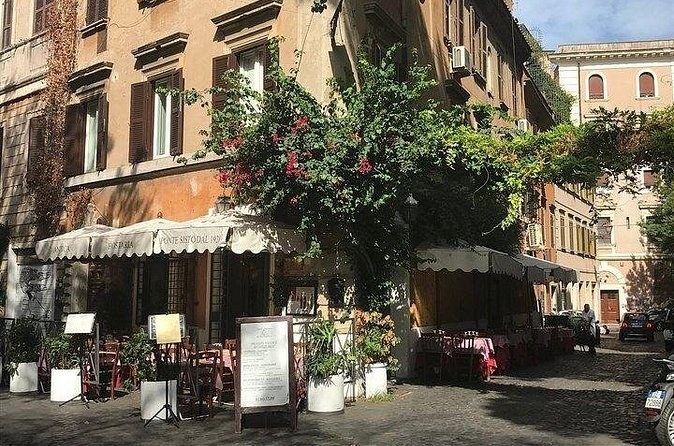
Trastevere and Jewish Ghetto Private Walking Tour
Two private hours from Piazza Trilussa, across Tiber Island to the Portico of Octavia.
From $176 per person
Check Availability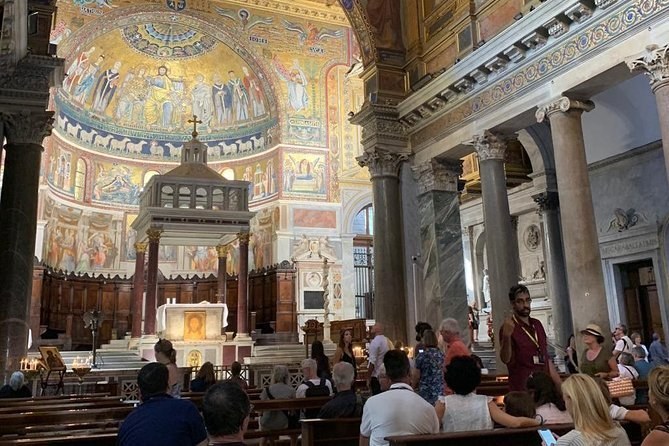
Private Tour - Trastevere and Villa Farnesina
Three private hours with Villa Farnesina and Santa Cecilia tickets in the fare.
From $158 per person
Check Availability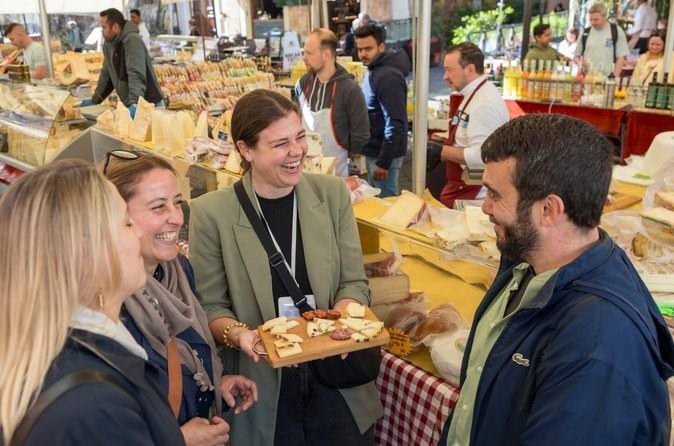
Rome Food & Wine Tour: 15 tastings in Trastevere & Jewish Ghetto
Tastings on both banks, from Piazza Farnese through the Ghetto into Trastevere.
From $85 per person
Check AvailabilityNext: choose the stories you want told, then the walk that tells them. Every fare sits side by side on Trastevere Rome Tours.