Trastevere Rome Street by Street: The Lanes and Piazzas the Tours Use
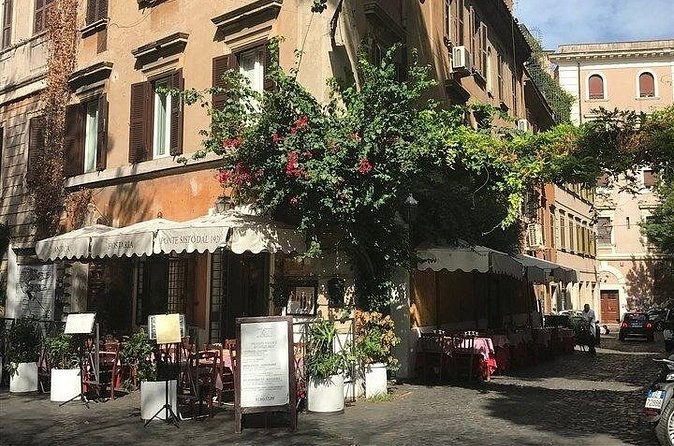
The short answer. Viale di Trastevere cuts the quarter in two. North-west of it is the Santa Maria side: Piazza Trilussa, Via della Scala, Via della Lungara and the main square. South-east is the Santa Cecilia side: Via dei Genovesi, Via dei Vascellari and the bridges to Tiber Island. Most food walks cross the Viale at least once. Allow two hours to walk both sides without a guide.
Trastevere has no single route, and that is why first-time visitors often see only one square of it. The lanes bend, the names change every few doors, and the best streets are not the widest. This guide walks you through the quarter one street and one piazza at a time. Each stop comes with what you will find there, the time to give it, and which tours use it. If you want to walk it with food in hand, a rome food tour trastevere covers most of this ground in an evening.
How the quarter is laid out
Think of Trastevere as two halves joined by the Viale, a wide tram avenue. The north-west half is older in feel and busier at night; it runs from the river up towards the Gianicolo. The south-east half is quieter and more residential, and it faces Tiber Island. The table shows how the main streets divide.
| Street or square | Side | What is there | Give it |
|---|---|---|---|
| Piazza Trilussa | North-west | Ponte Sisto and the poet's monument | 10 min |
| Via della Scala | North-west | Wine bars, the lane to Via della Lungara | 15 min |
| Via della Lungara | North-west | Villa Farnesina at no. 230 | 1–2 hrs with the villa |
| Piazza di Santa Maria in Trastevere | North-west | The basilica, its mosaics and fountain | 30 min |
| Piazza di Sant'Egidio | North-west | Museo di Roma in Trastevere | 1 hr |
| Via Roma Libera and Piazza di San Cosimato | South of the square | Trattorias and an open square | 20 min |
| Via di San Francesco a Ripa | Both sides | Bernini's Ludovica Albertoni | 20 min |
| Via dei Genovesi and Via dei Vascellari | South-east | Quiet lanes and Santa Cecilia | 40 min |
Piazza Trilussa and Ponte Sisto
Most people walk into Trastevere here. Ponte Sisto, the footbridge from Campo de' Fiori, was built in 1473–1479 for Pope Sixtus IV on the foundations of a Roman bridge. It lands you in Piazza Trilussa, named in 1952 after the Roman dialect poet. His monument, by Lorenzo Ferri, went up in 1954 and carries his poem "All'ombra". Both Ghetto walks and a food walk with free-flowing wine start here, so expect groups gathering in the early evening.
Via della Scala and Via della Lungara
From the square, Via della Scala runs north-west through the busiest part of the quarter. At number 27a is the wine bar where two of the tasting tables sit you down with food and gelato. Keep going and the lane opens onto Via della Lungara, straighter and quieter.
At number 230 is Villa Farnesina, built around 1506–1510 for the banker Agostino Chigi and painted by Raphael and his circle. It is open Monday to Saturday from 9:00 to 14:00, with a full ticket at €12. If you want to see it, you need to be there in the morning. The private walk that includes the villa's ticket meets at its door.
Piazza di Santa Maria in Trastevere
This is the heart of the quarter and the square in most photographs. The basilica's present building dates from a rebuilding of 1138–1143, and Pietro Cavallini's mosaics of the Life of the Virgin, in the apse, date from 1291. The fountain in the middle is where people sit in the evening. It is a working church, so check the notice at the door for its hours.
A minute away is Piazza di Sant'Egidio and the Museo di Roma in Trastevere. It opens Tuesday to Sunday from 10:00 to 20:00, and the museum alone costs €9.50.
Via Garibaldi, up towards the Gianicolo
Via Garibaldi climbs from the back of the quarter towards the Gianicolo. It is the one steep street most visitors meet. Partway up, at number 39, a cooking class runs in a family home for eight guests at most. At the top is the Fontana dell'Acqua Paola, built 1610–1614 for Pope Paul V, and beyond it the terrace where the noon cannon fires. Give the climb 20 minutes each way and bring water in summer.
Via Roma Libera and Piazza di San Cosimato
South of the main square the streets become more everyday. Via Roma Libera is where the twilight walk sits you down for its pasta course, and where the pasta class with a food tour does its cooking. Nearby Piazza di San Cosimato is on the route of the dinner walk that starts in Campo de' Fiori and crosses Ponte Sisto.
Across the Viale: Via di San Francesco a Ripa
Crossing Viale di Trastevere, you meet Via di San Francesco a Ripa, which runs through both halves. Its church holds Bernini's statue of the Blessed Ludovica Albertoni, commissioned in 1671 and in place by 1674. The twilight walk takes a tasting on this street. Watch for trams when you cross the Viale.
The quiet side: Via dei Genovesi, Via dei Vascellari and Santa Cecilia
South-east of the Viale, Trastevere slows down. Via dei Genovesi and Via dei Vascellari are residential lanes where the twilight walk stops for its first tastings. Between them stands Santa Cecilia in Trastevere, with Stefano Maderno's statue of the saint from 1600. The church is open Monday to Saturday from 10:00 to 12:30 and 16:30 to 18:30, so plan it before or after lunch.
From here, Ponte Cestio takes you onto Tiber Island and Ponte Fabricio, from 62 BC, takes you on to the Jewish Ghetto. The Trastevere neighborhood page explains how the two halves grew apart.
Things most walkers pass without noticing
- The poem "All'ombra" on Trilussa's monument, written in Roman dialect.
- Cavallini's mosaics of the Life of the Virgin in Santa Maria's apse, dated 1291.
- Maderno's St Cecilia, carved as the saint's body was said to be found in 1599.
- The worn stones of Ponte Fabricio, still in use more than two thousand years on.
A route that covers both halves
- Cross Ponte Sisto to Piazza Trilussa in the late afternoon.
- Walk Via della Scala and look down Via della Lungara.
- Sit by the fountain in Piazza di Santa Maria in Trastevere.
- Head south on Via Roma Libera to Piazza di San Cosimato.
- Cross the Viale to Via di San Francesco a Ripa.
- Finish on the quiet side at Santa Cecilia, then walk on to Tiber Island.
That is about two hours at an easy pace, without stops for food. The Trastevere map plots every square on it, and surprising Trastevere facts adds the stories behind them.
Tours that walk these streets
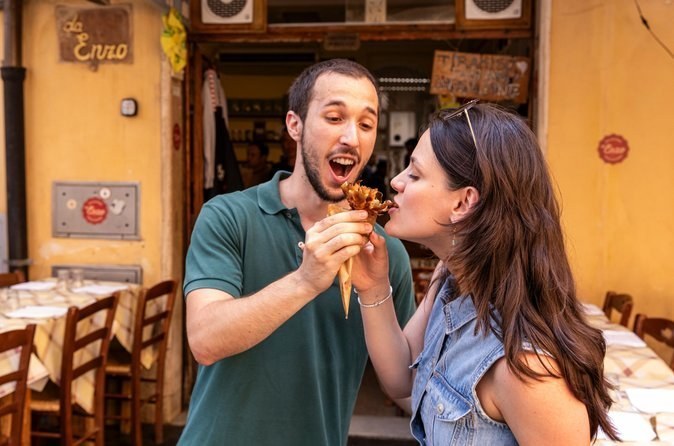
Winner 2026 Rome Twilight Trastevere Food Tour by Eating Europe
Four evening hours from Tiber Island, six or seven stops and a seated pasta course with wine.
From $122 per person
Check Availability
Rome: Trastevere Food Tour with Local Food & Wine Tastings
Dinner and wine that starts in Campo de' Fiori and crosses Ponte Sisto into Trastevere.
From $199 per person
Check Availability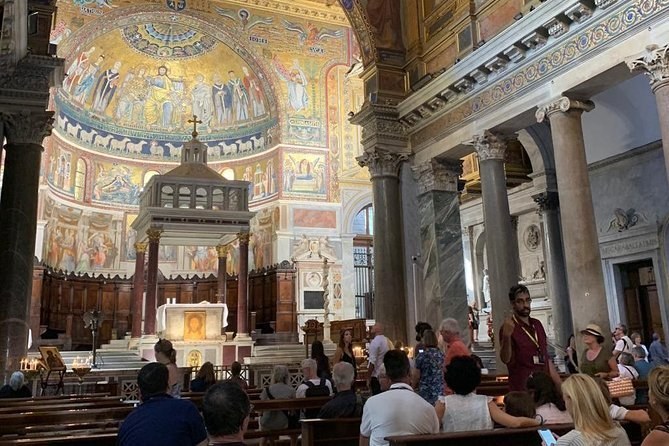
Private Tour - Trastevere and Villa Farnesina
Three private hours with Villa Farnesina and Santa Cecilia tickets in the fare.
From $158 per person
Check AvailabilityNext: pick the side of the Viale you want to see, then the tour that walks it. Every fare sits side by side on Trastevere Rome Tours.