Trastevere Rome Without a Tour: What You Can Do on Your Own
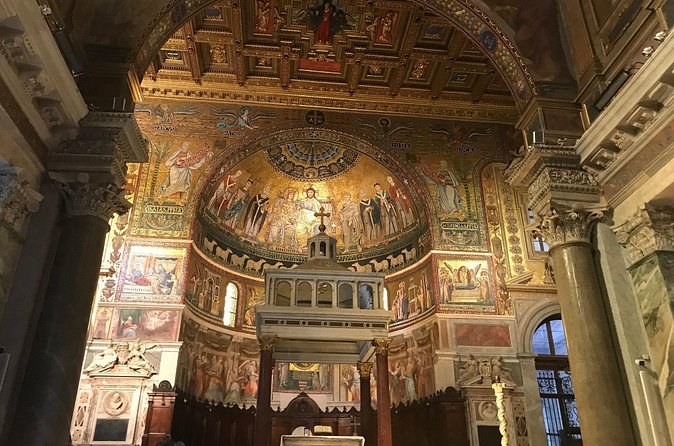
The short answer. You do not need a tour to see Trastevere. It has no gate and no ticket, and its lanes, piazzas, bridges and the Gianicolo view are free all day. Buy your own tickets for Villa Farnesina (€12) and the Museo di Roma in Trastevere (€9.50). A tour earns its fare in two places: an evening of food you would not have found, and history you cannot read off a wall.
An honest answer first: most of what makes Trastevere worth a visit costs nothing and needs no guide. You can walk in over a bridge, sit on the fountain steps in Piazza di Santa Maria and watch the evening start. This guide sets out what you can do alone, what it costs, and the few places where a guide changes what you get. If a guide turns out to be worth it, a Trastevere Rome walking tour is the place to start, and the food walks close this guide.
Do you need a tour to see Trastevere?
No. Trastevere is Rome's Rione XIII, a neighborhood of lanes and squares on the west bank of the Tiber, not a monument. There is no entry fee, no ticket booth and no opening time. Nobody checks you at the bridge.
What a tour adds is selection and explanation. It chooses the places, it books the tables, and it tells you what you are looking at. Whether that is worth money depends on how you like to travel and how much time you have. Many visitors do both: a free day on their own, and one guided evening.
| Activity | On your own | With a tour | What you miss alone |
|---|---|---|---|
| Walking the lanes | Free | Part of every walk | The stories behind the names |
| Villa Farnesina | €12 full ticket | Private walk, $158 a head, entry paid | A guide in front of the frescoes |
| Santa Cecilia | Ask at the door about the crypt | Entry paid on the private villa walk | Very little, if you read up first |
| Dinner | Whatever you order | $57 to $199 a head, food and wine in | Stops you would not find, tables held |
| Wine | A glass at any bar | $45 to $49 a head at one bar | A guided flight of five |
| The Jewish Ghetto | Free to walk; museum €12 | $139 to $176 a head | The 1555 to 1943 story on the spot |
What is free to see on your own?
Most of it. These are open air and cost nothing:
- Piazza di Santa Maria in Trastevere, with its fountain and the basilica's gold facade mosaics.
- Piazza Trilussa, at the foot of Ponte Sisto, with Lorenzo Ferri's monument to the dialect poet Trilussa, unveiled on 22 December 1954.
- Ponte Sisto, the footbridge Pope Sixtus IV built between 1473 and 1479.
- Tiber Island, reached by Ponte Fabricio of 62 BC, the oldest Roman bridge still standing in its original form.
- The Gianicolo, the ridge above the quarter, with the noon cannon and the Fontana dell'Acqua Paola.
- Porta Portese, the Sunday flea market, with stalls open between 7:00 and 14:00.
Santa Maria in Trastevere is a working basilica. Check the notice at its door for the hours before you plan around it. Things to do in Trastevere has the rest of the list.
Which tickets can you buy yourself, and what do they cost?
- Villa Farnesina: €12 full, €10 reduced, €7 for ages 10 to 18, free for under-10s with a parent. Monday to Saturday, 9:00 to 14:00, plus the second Sunday of each month.
- Museo di Roma in Trastevere: €9.50 for the museum alone, €5 reduced; €13 and €8.50 when an exhibition is on. Booking online adds €1. Tuesday to Sunday, 10:00 to 20:00.
- Jewish Museum of Rome, with a guided visit to the Great Synagogue: €12 full, €10 reduced, €6 for students under 25, free under 10. Closed on Saturdays and Jewish holidays.
- Santa Cecilia in Trastevere: open Monday to Saturday 10:00 to 12:30 and 16:30 to 18:30. Ask at the door about the excavations and the Cavallini fresco.
None of these needs a tour. The only one a tour includes is Villa Farnesina with Santa Cecilia, on the private walk that meets at the villa.
How do you see the Jewish Ghetto on your own?
Walk over Tiber Island by Ponte Cestio and Ponte Fabricio, and you are there in a few minutes. The Portico of Octavia, the Theatre of Marcellus and the Fontana delle Tartarughe in Piazza Mattei are all free to see from the street. For the inside of the Great Synagogue, buy the Jewish Museum ticket, which includes its own guided visit.
What you miss alone is the story told where it happened: the bull of 14 July 1555 that confined Rome's Jews behind walls, the abolition of the Ghetto in 1870, and the round-up of 16 October 1943. The Jewish Ghetto page sets it out if you want to read it before you go.
Can you eat well without a guide?
Yes, if you are willing to walk a street or two off the main squares and read the menu before you sit. Look at what the tables around you are eating before you order. Roman classics to look for are cacio e pepe, carbonara, supplì and, in the Ghetto, carciofo alla giudia, the whole artichoke deep-fried.
If you have an allergy, you have a legal ally. Under EU Regulation 1169/2011 every food business must be able to tell you which of fourteen listed allergens a dish contains, from gluten and milk to nuts and sesame. Ask for the allergen information. Coeliacs can look for venues trained under the Associazione Italiana Celiachia's programme, which lists over 4,000 across Italy. Our food allergies page covers the tours too.
What does a food tour give you that a menu does not?
Three things. It chooses: every stop is picked, and you do not spend the evening reading reviews on a pavement. It holds tables: on the twilight walk, selected departures sit at places such as Da Enzo or Spirito di Vino. And it orders things you would not, from thirty-year balsamic to the day's fried specialities.
It also takes the pricing off your mind. The fare pays for the food and wine, so there is no bill at each stop. That is worth a lot to some travellers and nothing to others.
When is a walking tour worth it?
When the thing you want explained is not written on a wall. Villa Farnesina's frescoes, the Ghetto's history and the layers under Santa Cecilia are all better with somebody who knows them. A walking tour is also worth it when time is short: a guide gets two neighborhoods into two hours without a wrong turn.
When is it not?
When you want to sit in a piazza, wander without a plan, or save the money for dinner. It is also not worth it on a Sunday if Villa Farnesina is the reason, because the villa is shut on most Sundays. And if you are on a tight budget, walk the lanes yourself and put the fare towards one good evening. You do not need a guide for the Sunday flea market either: it is free to browse, and you move faster without a group.
Getting there alone: tram, taxi, bridges
- On foot. Ponte Sisto from Campo de' Fiori lands you in Piazza Trilussa. Tiber Island joins the Ghetto to the south-east of the quarter.
- Tram 8. It runs from Piazza Venezia to Casaletto through Trastevere. A BIT ticket is €1.50 and valid for 100 minutes on buses, trams and the metro.
- Taxi. Taxis are exempt from the Trastevere limited-traffic zone. Pedestrian squares are the exception: Piazza di San Simeone, where one street-food walk meets, cannot be reached by car.
Frequently asked questions
Is Trastevere Rome worth visiting?
What are Trastevere Rome ticket prices?
Can I go inside the Great Synagogue?
Is a Trastevere Rome walking tour worth it without food?
Is the Jewish Ghetto in Trastevere?
Is there a dress code?
Tours for the part you cannot do alone
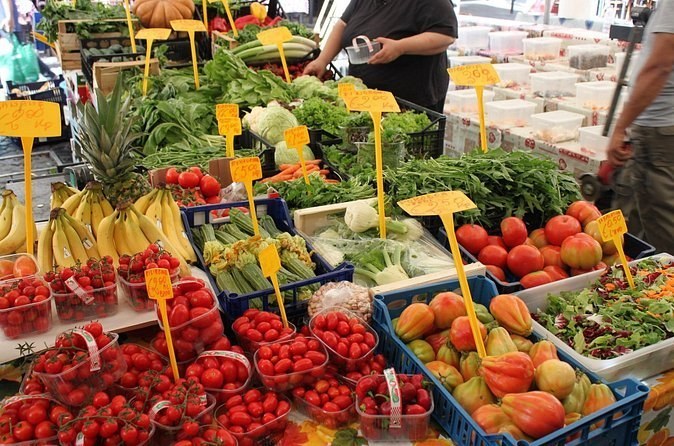
Trastevere and Jewish Ghetto Semi Private Tour MAX 6 PEOPLE GUARANTEED
The same two neighborhoods on foot from Piazza Trilussa, shared rather than private, with a coffee or gelato.
From $139 per person
Check Availability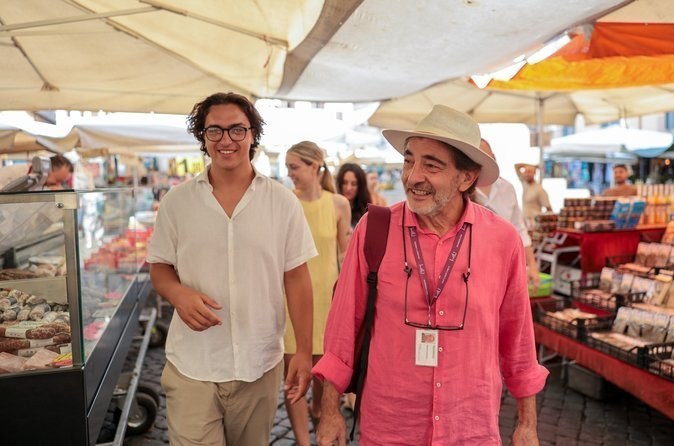
Rome Trastevere Campo de' Fiori Street Food Tour Eat Like a Local
Two and a half hours of street food from Piazza di San Simeone; drinks are extra.
From $57 per person
Check Availability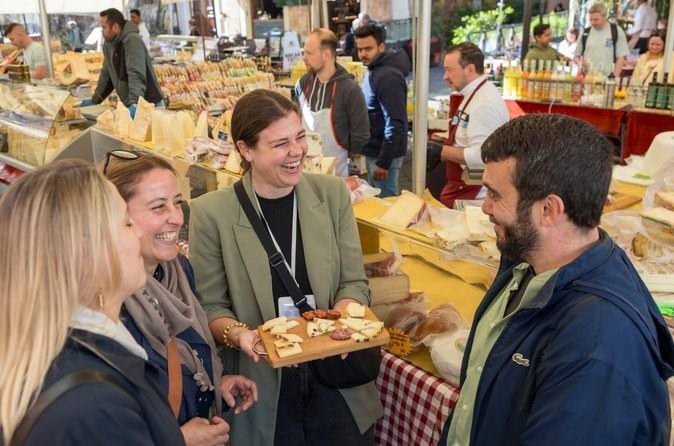
Rome Food & Wine Tour: 15 tastings in Trastevere & Jewish Ghetto
Tastings on both banks, from Piazza Farnese through the Ghetto into Trastevere.
From $85 per person
Check AvailabilityIf you decide on a guide, every walk is compared on Trastevere Rome Tours.